


WHEN ANTONIO GRAMSCI wanted to talk to his comrades, he wrote to his friends. Captive in a fascist regime, he produced sentences and texts encrypted enough to bemuse not only Mussolini’s censors, but also, probably, anyone who did not know him very well. He was a party man, and he knew better than to either spell out or dispel the party line. That is (likely) why many of his pronouncements, despite being intimately tied to news of the day, sound ambiguous or generalized, and why his critiques are delivered softly, almost as musings, effectively concealing intra-left disagreements and ideological vulnerabilities from those who would pounce. The result is an unreliable legacy. Gramsci’s sibylline edicts are vulnerable to abstraction at the hands of facile interpreters like Žižek, who gives us a comic-book axiom (“now is the time of monsters”) in place of the historically specific, if also lately reapplicable, diagnosis of a revolutionary impasse in a multipolar world between wars (“in this interregnum a great variety of morbid symptoms appear”).
In a 2002 interview with a French literary journal, the novelist Antoine Volodine took a position that seems inspired by this reading of Gramsci’s notebooks, which I performed above with the help of (I have to be honest) New Left Review. Answering a question about whether his novels index his political commitments (yes), he said of his oeuvre:
It is a wary, detached discourse that uses systems of codes other than metaphorical coding. It is very wary of the excessive transparency of metaphor. Outside, within the sphere of sympathizers and readers, all sensibilities can exist. It is possible to understand the discourse, to grasp it entirely, down to its irreducible core. It is also possible to miss it, to grasp only its poetic aspects, for example. In any case, there’s no point in looking for encrypted messages for action, for insurrection . . . or apocalyptic texts intended for chosen ones or whatever in post-exoticism.
Volodine is a name for a French writer whose life’s work issues from a desire to have belonged to the Association des Écrivains et Artistes Révolutionnaires (AEAR) in 1930s France, a group of communists and fellow travelers among whose numbers were many gay surrealists. This writer has other names, or “heteronyms,” as he/they says, such as: Lutz Bassmann, Manuela Draeger, Elli Kronauer. Together they are inventing a movement against time, called “post-exoticism.” (What was exoticism? No answer will help the person who feels the need to ask.) The “post-exotic” archipelago comprises forty-five books, only two dozen of them available in English. Of those, ten are by Volodine. These are the ones I’ve read.
Volodine’s wary, detachable discourses have proliferated over several books explicitly set in the bardo, that intermediary void where, according to the operational logic of Tibetan Buddhism, the departed soul must wander for forty-nine days between death and rebirth. His protagonists are prisoners of memory, refugees from historical time, chrononauts setting up camp in the detemporalized zone between a recaptured past and a distant, high-walled future. Here in what Volodine calls “the black space,” opposites (sane and insane, living and dead) are all abolished. Good news for anarchists. Bad news, perhaps, for people with better-tested political commitments. History runs on contradiction—the principle by which two things can be true, but not for long—and without it, any communist plot seems doomed.
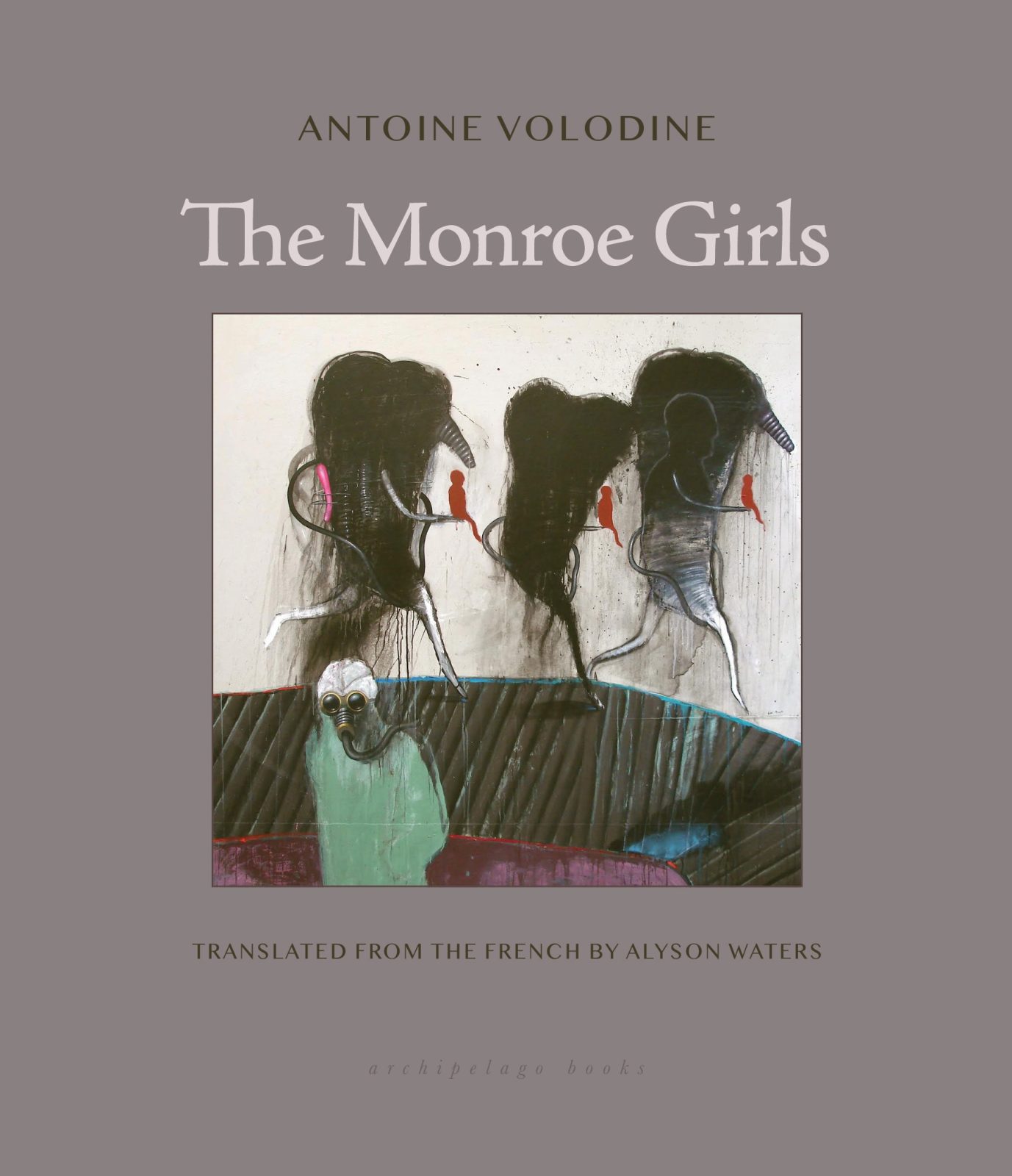
Morbid symptoms are incessantly made flesh in this interregnum. Volodine opens his latest, The Monroe Girls, with a woman briefly suspended from a fourth-floor window before disappearing into the crepuscular irreality of an unmapped street. “Her name was Rausch. Rebecca Rausch. Thirty years ago, I was madly in love with her. Then she died.” But here she is, fetal on the pavement, emerging after five minutes from a catatonic state to complain of cold feet. The chapter ends. The new world is stillborn. “And once again, the image,” begins the second chapter. “The girl remained suspended at the level of the fourth floor, between earth and sky. She had a name. Rausch. Rebecca Rausch.” The same scene, described differently but from the same vantage—revision as literally “second sight.”
Who is this seer and what is he on? Breton is a schizophrenic, he says, and a shaman. (It is probably not a coincidence that he shares a surname with the renegade André, one of the first members to be expelled from the AEAR.) With the help of special glasses or lenses, he can perceive across the membrane between worlds, calling life out of darkness.
So in other words, he is a filmmaker. This is important because in recent years, many contemporary novelists have capitulated to the superstructural dominance of the moving image that has been enabled by the proliferation into everyone’s hands of image-making technology, a shift that would be less upsetting if more of them could set up a shot. Sally Rooney is a great example of a neorealist who can write transfixingly for pages on end about, say, an irrecoverable lapse in fealty on the part of a lover without once straying from the vantage point of a CCTV camera. The problem is that great examples are few. In December I contributed to Granta’s year-in-reading list and found myself far from alone among critics who have suddenly given up on contemporary fiction, which I should think—well, I would think—is because so many “buzzy” debuts read like less economical screenplays. I wonder if the new novelists would turn around and blame critics, since it is largely literary criticism of the postgraduate kind that has insisted on stories being legible through a sociopolitical so-called lens, but find it more likely that whether they know it or not, they are writing toward the career-making promise of a cinematic or (more likely still) televisual adaptation without having any faith in the power of the medium to which they’ve lost.
Volodine does not share this problem. He writes like he’s daring a director of photography to match his vision. The protagonist (Breton) and the narrator (“I”) see and speak alike, though not always simultaneously. There are moments of lag, drift, dissonance. It takes a second—going back to the two-take beginning of the novel—to realize they are one and the same in others’ eyes, and even after this realization a kind of affective diplopia persists. It’s really beautiful, seems hard to replicate in-camera, and makes an argument for a more dialectical relationship between the novel and cinema, like the one Tolstoy in his own way predicted:
“This swift change of scene, this blending of motion and experience—it is much better than heavy, long-drawn-out kind of writing to which we are accustomed. It is closer to life. In life, too, changes and transitions flash by before our eyes, and emotions of the soul are like a hurricane. The cinema has divined the mystery of motion. And that is greatness.”
The Monroe Girls, like Radiant Terminus (2017) before it, is set in the “Second Soviet Union.” There is no explicit discussion of a First Soviet Union, though its myths and norms interpellate the denizens of this one. Possibly the second is not a chronological successor, but rather an alternate vision, from another timeline, like Earth 2 in movies based on comic books. In any case, this world revolution too is on the brink of defeat. It’s almost the year 2100. Some cataclysm—nuclear, ecological, other—has left the landscape largely bereft of human life. Breton is always leaning on a plane tree for support. Like the California girl in Pynchon’s Vineland, he trusts in vegetation. “The trees are not old,” the narrator in Mevlido’s Dreams tells himself. “They were born after you, after the end of the war; they will outlive you. Don’t be afraid of that.”
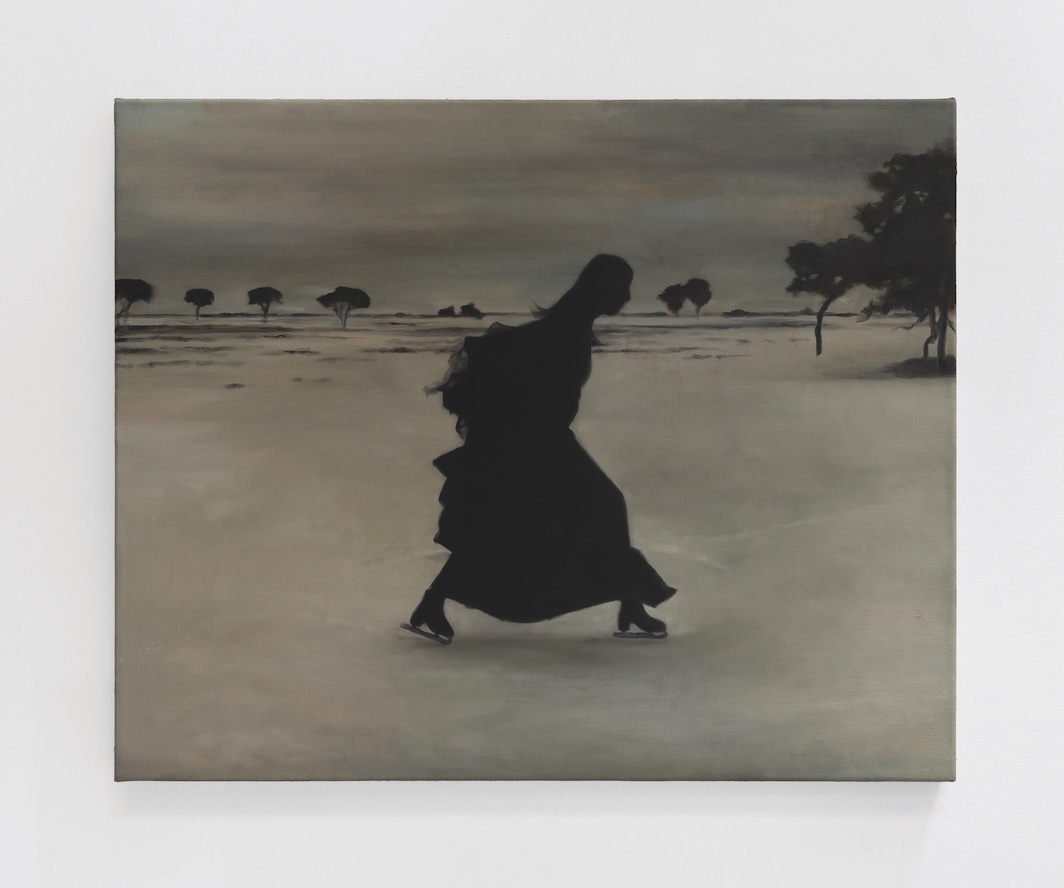
Communism is the air, water, atmosphere of Volodine’s novels. The characters have their disagreements along with their commitments, as evidenced by a pages-long list of Party and ex-Party factions with Pynchonian names: The Leninists of the Fifth Day, The Posadists of the Ninth Month, The Partisans of the Red Lotus, The Midwives of the Future, The Unified Bordigists, The “Let’s Confess Everything” Tendency, The “Lesbians Without Borders,” and so on. These absurdist in-jokes—most of which refer to real types of people you can meet in community centers, jail cells, and bookstores—add up to a normalization and not an indictment of communist theory and practice. Line struggle continues, says Mao, because without it the Party gets bored and dies (I am paraphrasing, with apologies to the Maoists Past Their Prime). So Volodine’s characters dissent but do not become dissidents. In Minor Angels, one of the titular characters attends to the execution of her own grandson as punishment for bringing back capitalism, even though he didn’t mean to—long story, but it’s the most moving apologia for “left authoritarianism” since Brecht’s play The Decision. Similarly, in Writers, the writer-protagonist ends by reciting the names of the people Stalin executed on the day of his birth, but to me the litany reads not like an accusation, but like the acknowledgments section in a master’s thesis.
Monroe is either a visionary or a revisionist, but either way he is surviving through mythification. The Monroe girls—killed and reborn as falling angels—are the paramilitaries he has trained for the purposes of regenerating the Party. One by one they emerge from l’obscurité, a word (in the original French text) that helpfully refers to both an absence of light and a resistance to epistemic capture. Breton’s task is to identify and name the girls, making them legible to the Party apparatus. He will not do this, on account of whatever happened thirty years ago. He will not, or cannot.
Breton’s memory of loving Rebecca Rausch animates the novel the way a girl’s face animates La Jetée. For him, the image of her has never faded, nor has it been replaced, nor has it been relegated to one among a number of images of women. She is singular, “la femme de sa vie.” When they meet again halfway through the book, he is sure that the single-mindedness is mutual. But the virago he encounters, swearing in the “unholy language of the dead,” is nothing like the beloved who bathes in his memory. At the end of this first encounter in three decades, she suddenly realizes: he’s not really her type! Like at the end of Swann in Love,but worse because the years are still wasting.
There is also a way in which revelation lies outside his narrative purview. Breton sees the Monroe girls through dirty binoculars in the rain, sees them obscurely, or only in part, never clearly enough to identify them with certainty. At one point, he writes a name with his finger on a windowpane. The message is already invisible, and it’s raining. But he is paranoid and thinks the interrogators will be able to read it somehow, so he breaks the glass. What was he saying again—Volodine—about “the excessive transparency of metaphor”? Maybe it’s metalepsis, a literal and allegorical shattering of the metaphorical object, that secures for the girls their “right to obscurity,” cf. Glissant. (Though actually, it was “opacity” in his telling. “L’opacité, c’est pas l’obscurité,”he had to say in Poetics of Relation,a year after the English translator J. Michael Dash, in Caribbean Discourse, conflated them.)
In the early 2000s, a friend of Volodine’s asked him to supply a title for a hypothetical future conference on his work. Volodine replied: “Writing a Foreign Literature in French.” Translators must love this—he’s speaking their language, the language of translation, the way Godard spoke through his films the language of film criticism. For The Monroe Girls, Volodine’s prose is elegantly rendered by Alyson Waters, who mostly preserves the hypnotic rhythms and tempo of the original, although she does occasionally slow his roll by replacing a comma with a colon: a little river dam. Impressively, she preserves his comic timing. During Rebecca Rausch’s climactic speech, Breton struggles to stay awake, trying not to “show the speaker that her call to the masses puts the masses to sleep.” When a character is promised rehabilitation at the hands of the Party, the retort is right there: “Before or after the execution?” This is gallows humor for fans of Lenin’s kulak-hanging order (“P.S. Find tougher people”). It translates, unlike most Soviet jokes.
In a 2020 interview with Jean-Louis Hippolyte for World Literature Today, a seventy-year-old Volodine—speaking for his friends—explained that “the apocalypse is almost never the subject of our books. What has interested us all along is to take survivors, long after the catastrophe, as the center of the narrative.” Wildly, this after is an even longer before. In Writers, a phantom speaks through a prisoner to a man called Ilyitch, ergo Lenin: “Do you ever think maybe [the revolution] would never come to pass, not even in a thousand years?” Now in reality a question this wistful should be phrased in the positive, counterposed to bleak probabilities; to put it back in the negative, paradoxically, is to make revolutionary optimism the norm.
The other day I watched a documentary made by some adventuring East Germans about South Yemen circa 1971, a few years after a party-led revolution made it the region’s first (and to this day only) true socialist state. I was very moved by the film’s brief encounters with the Qarmatians, who spoke of having been communists in principle and in practice since the early tenth century. A thousand years. In my favourite scene, one of the documentarians asks an old man, what is democracy? And you’ll have to forgive me if I get this wrong, because the subtitles stopped working halfway through and I barely speak German. I think, however, that he answered laconically and dare I say dismissively: Freedom of speech.Then what is revolution? He smiles. That which must be done.
When a Monroe girl dies for the last time, her body decomposes into a spiny black resin and becomes host to any number of sea urchins, a process that is “without horrible suffering and without theatrics” and that, despite its apparent strangeness, came to strike me as the most natural of all possible deaths. I thought of the physicist offering her body to the earth in the Hollywood film Annihilation. Volodine’s vision of (r)evolutionary sacrifice is less beautified and may even be rebarbative, but this is because he understands transformation to be the condition, not the event. The novel ends with the protagonist falling asleep, then the narrator, then the reader. The story is to be continued in our dreams. n\
Sarah Nicole Prickett is a writer and editor living in Montreal.