PEOPLE WHO FOLLOW the teachings of Wittgenstein, whether or not they do so wittingly, find nothing more frightening—or more potentiating—than a state of wordlessness: the end of the world. We can see this clearly in the time of live-streamed genocide, when the avowal that “there are no words” is often what passes for attunement to […]
- print • Summer 2026
THE DANISH WRITER Tove Ditlevsen divorced her fourth husband, the tabloid mogul Victor Andreasen, in 1973. They’d been together for twenty-two years. Andreasen was then in his second stint as editor in chief of Ekstra Bladet, the tabloid he’d saved from financial ruin. Soon after their divorce, Ditlevsen published the following anonymous personal ad in […]
- print • Summer 2026
WHEN THE WORLD ENDS, what will you miss most? I’ll miss running in the woods, and the buttery, grassy smell of a horse’s cheek. In Earth 7, Deb Olin Unferth’s third novel, characters miss what they never knew: Earth in her prime. From their perspective, the golden age of Earth includes our own current moment, […]
- print • Summer 2026
GWENDOLINE RILEY, THE FEROCIOUSLY TALENTED forty-seven-year-old British novelist, is deeply and rightly admired—by younger female readers in particular—for a body of work that now comprises eight increasingly sophisticated novels, all of them short and lacerating. Riley’s oeuvre, in other words, has become an object of widespread readerly love even as her books themselves can seem […]
- print • Summer 2026
SOMEWHERE IN THE MIDDLE of Crime and Punishment, Raskolnikov, Dostoyevsky’s antihero, gives himself one of many pep talks about why he might have been right to have murdered an elderly woman. There are naturally two types of man, he tells himself: the inferior, who can only reproduce what already is, and he who has the […]
- print • Summer 2026
NEARLY EVERY MILLENNIAL WOMAN I KNOW carries with her a bone-deep knowledge of the same frightening folktale: a girl-child, blonde and beautiful, is born in Nowhere, USA, and becomes public property by virtue of her talent. She turns sixteen, and as the clock strikes midnight a transmogrification occurs, turning her into a plastic thing, an […]
- print • Summer 2026
Late in The Vivisectors, the aloof protagonist, Agathe, theorizes about the state of the contemporary novel. “There are no places and barely any proper names,” she reflects ruefully. Agathe is the daughter of a renowned literary critic, who has his own theory on the state of modern fiction, that fiction must now “move as smoothly […]
- • Summer 2026
IN HOUSEPAINTER’S LINGO, there is a term for a missed spot or a patch of uneven coverage: “a holiday.” As in, somebody took one! As in, make sure to get that holiday by the garage before you go home. A fleck of some forsaken color marks a gap: a slick of neglect, a tiny relic […]
- print • Summer 2026
SOMETIMES IT FEELS LIKE THERE ARE THREE TRUE OUTCOMES FOR MILITANTS. You run, you’re imprisoned, or you die. Sometimes it’s all three. The Weather Underground (WU), perhaps the most notorious of the late-1960s American radicals, met all these fates—including, most famously, accidentally blowing up three of their own. Born locally out of the violent splits […]
- print • Spring 2026
THREE HUNDRED and twenty-three pages into Lonesome Dove, the eight-hundred-and-fifty-eight-page Western epic that propelled Larry McMurtry to a level of literary celebrity that’s hard to imagine today, his two principal characters ride into San Antonio for the first time in many years. The era is the late 1870s, the twilight of the American frontier. The […]
- print • Spring 2026
BEN LERNER MIGHT BE the youngest writer in America who is permitted to write with luminous intelligence about erudite, urbane intellectuals without being accused of insularity. The American scribblers younger than Lerner are consigned to a fate of feigned populism or critical sniffing at anything that might pass for a sign of intelligence. He is […]
- print • Spring 2026
ON THE CALCULATION OF VOLUME is a series of seven novels by the Danish writer Solvej Balle that imagines a world in which one November day repeats indefinitely. Six volumes have so far been published in Denmark; in the United States, Volume IV is the newest to be available, in a translation by Sophia Hersi […]
- print • Spring 2026
THERE IS SUCH A GLUT of unhinged female narrators in contemporary fiction that a recognizable microgenre is emerging around these often self-infantilized madwomen. My Year of Rest and Relaxation and its many imitators treat the instability and anhedonia of women as a source of self-deprecating comedy and little else. However enfeebled they have been made […]
- print • Spring 2026
THE DESERT TORTOISE has lived on the land we call California for twenty million years. If you scare one, he might pee and become fatally dehydrated. But don’t worry, you won’t scare one. You won’t get the chance. In “Dangerous,” a short story by Joy Williams, the narrator’s mother, recently widowed, builds a three-foot-tall tortoise […]
- print • Spring 2026
PATRICK COTTRELL’S FIRST BOOK, the novel Sorry to Disrupt the Peace, published in 2017, comes in a silvery gray dust jacket depicting a waterfall, in honor of the image the narrator brings to mind in moments of stress. The cover, designed by Sunra Thompson for McSweeney’s Press, looks lovely and peaceful at first glance, but […]
- print • Spring 2026
WHEN ANTONIO GRAMSCI wanted to talk to his comrades, he wrote to his friends. Captive in a fascist regime, he produced sentences and texts encrypted enough to bemuse not only Mussolini’s censors, but also, probably, anyone who did not know him very well. He was a party man, and he knew better than to either […]
- print • Spring 2026
“IN A GREAT CITY,” wrote Karan Mahajan in his award-winning ode to New Delhi, The Association of Small Bombs, “what happens in one part never perplexes the other parts.” In Delhi’s illustrious apartment complexes, by contrast, turbulence in one unit—extramarital affairs, domestic abuse, the acquisition of a new rock album—means turbulence for all. This is […]
- print • Spring 2026
THE SECOND NOVEL is an abundantly documented enigma, but if you’re Lisa Robertson and your second novel is also your seventeenth(ish) book, it’s less an enigma than it is an invitation to begin again—and Robertson’s career has, for over three decades now, been dependably refashioned or reconstituted or reorganized by beginnings, all of them variant […]
- print • Winter 2026
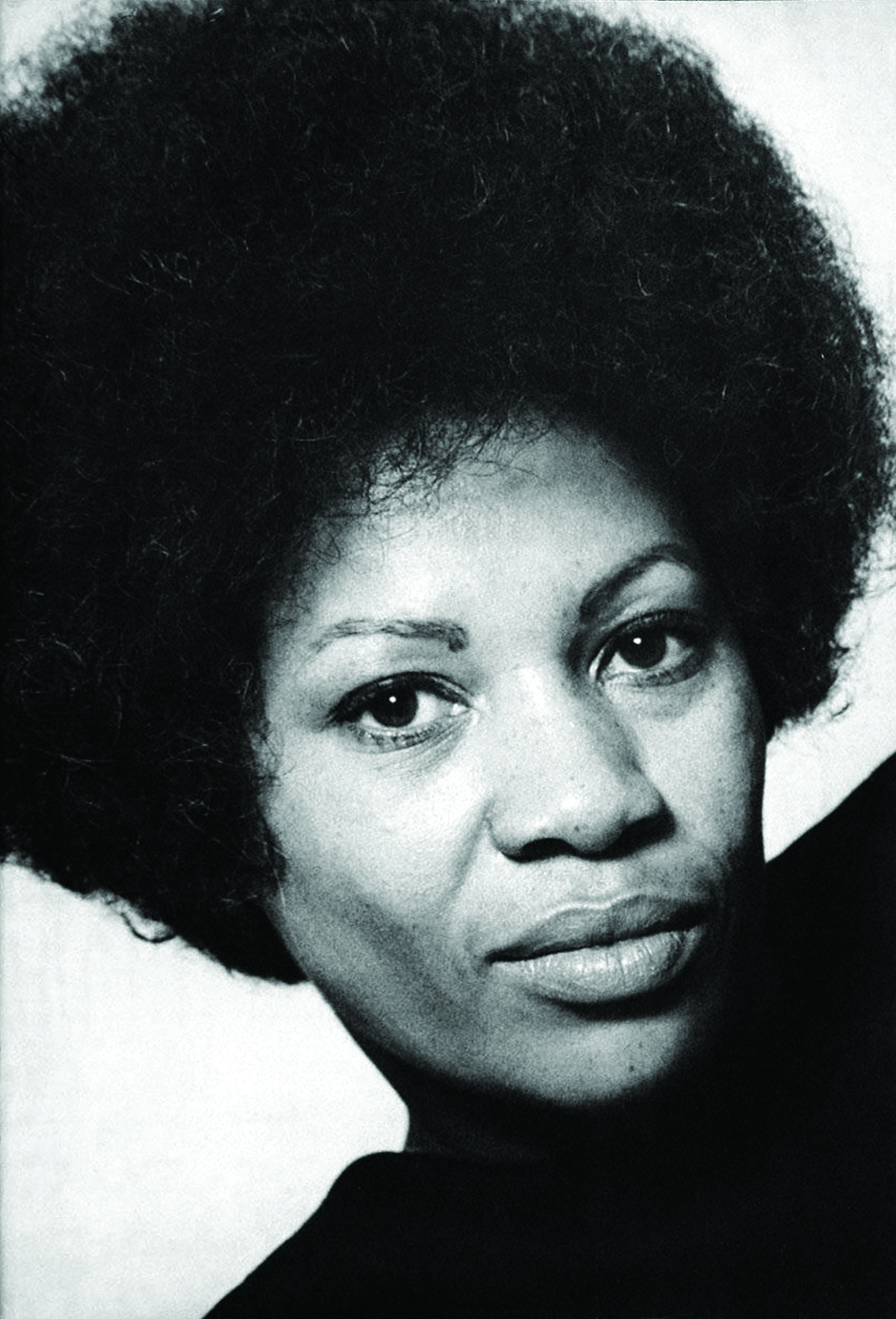
I CRY EVERY TIME I FINISH SULA. This is not due to any lack of acquaintance with the novel’s tragic ending. Toni Morrison’s second published work of fiction was assigned reading in several courses I took during my studies. I have taught Sula at least once a year for the past ten years. On vacations, […]
- print • Winter 2026
IT’S NOT SAID often enough, if it’s said at all, that avant-garde American poetry is experiencing a renaissance—an overbroad, obnoxious term that nonetheless fits the scale of the moment. For the early part of the twenty-first century, unless you really paid attention to the little magazines and small presses or, later, to Tumblr, you might […]