


THREE HUNDRED and twenty-three pages into Lonesome Dove, the eight-hundred-and-fifty-eight-page Western epic that propelled Larry McMurtry to a level of literary celebrity that’s hard to imagine today, his two principal characters ride into San Antonio for the first time in many years. The era is the late 1870s, the twilight of the American frontier. The players are Woodrow Call and Gus McCrae, two former Texas Rangers once celebrated for their bravery and straight shooting, men who did as much as any to tame the Wild West. On their approach to the city, Gus marvels at the new settlements springing up on its outskirts, early signs of the urbanization and sprawl that had long since transformed McMurtry’s home state and muse by 1985, the year he published his most enduring work. “Now look at that,” Gus remarks to Call. “The dern people are making towns everywhere. It’s our fault, you know.” When his partner balks, Gus presses the point. “Does it ever occur to you that everything we done was probably a mistake? . . . Me and you done our work too well. We killed off most of the people that made this country interesting to begin with.” Call doesn’t answer. “It was one of Gus’s favorite themes,” McMurtry’s narrator explains, “and if given a chance he would expound it for hours.”
It was one of McMurtry’s favorite themes, too, and he expounded on it not only across the vastness of Lonesome Dove but also its sequel, two prequels, and many other books. Call and Gus have retired as Rangers by the time the first installment begins. The Comanches and Kiowas have mostly been “licked,” as the cowboys like to say, the buffalo hunted near to extinction. The two spend their days doing not much at all until Call gets the romantic notion to drive a herd of cattle from their home on the Rio Grande all the way up to Montana, motivated by some mixture of boredom and pioneer spirit. Life has gotten comfortable in Lonesome Dove, the border town that gives the novel its name—too comfortable. Call has heard that the Montana plains aren’t settled yet, and he’d like to be the first to try. As the old-timers head north, encountering tragedy after tragedy along the way, Gus constantly reminds Call and the reader of the journey’s futility. Call fails to see the irony: they’re roaming the West in search of wild freedom, and wherever they settle, they’ll begin the slow process of snuffing it out.
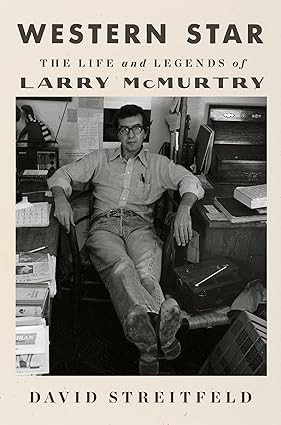
Western Star: The Life and Legends of Larry McMurtry, by David Streitfeld, a friend of McMurtry’s and a Pulitzer-winning reporter, is billed as the definitive biography of the great Texas novelist. Its arrival is well timed. Lonesome Dove has experienced an unlikely surge in zeitgeisty energy over the past year: pieces in Esquire and the New York Post purporting to explain why everyone is suddenly reading this gargantuan forty-one-year-old cowboy novel, and why thousands of enthusiastic reviews are proliferating on TikTok. At the time of this writing, it’s the seventh-best-selling paperback in the US, right behind Heated Rivalry.Maybe readers are drawn to the book’s deflation of American exceptionalism at a time when our national avarice and hypocrisy are on full display; maybe they just like spending time with Gus and Call. Lonesome Dove is McMurtry’s most thematically purposeful book, but at the end of the day, he cared more about people than ideas. “For me the novel is character creation,” McMurtry once wrote to his friend Ken Kesey. “Style is nice, plot is nice, structure is okay, social significance is okay, symbolism worms its way in, timeliness is okay too, but unless the characters convince and live the book’s got no chance.”
Born in 1936, McMurtry spent his earliest years on a ranch outside Archer City, Texas, a grandson of nineteenth-century settlers much like the ones Gus sees outside San Antonio. The cabin where he lived with his parents and paternal grandparents had no electricity until he turned three. His father began teaching him to drive cattle a year later. In Walter Benjamin at the Dairy Queen,a casually erudite 1999 memoir about his childhood and early call to storytelling, he proudly identified himself as “one of the few American writers who can still claim to have had prolonged and intimate contact with first-generation pioneers.” He published Horseman, Pass By,his first novel, in 1961; two years later, it became the Paul Newman vehicle Hud, the first of several classic film adaptations of his work. Soon enough, he was about as famous as it was possible for a contemporary American novelist to be: hobnobbing with movie stars, being quoted in presidential speeches, getting rich.
By the time he died of congestive heart failure in 2021, his profession had nearly gone the way of the cowboy. He fought harder than most novelists to preserve the book’s status as a cultural totem, but also dabbled more than most with writing for film and TV, sometimes with art in mind and others for a quick buck. (Like the heroes of Lonesome Dove, he may have had a hand, however small, in the undoing of his own vocation.) He liked to point out that the Old West, an era he demarcated with the 1804 Lewis and Clark expedition on one side and the 1890 Wounded Knee Massacre on the other, the foundation of so many American myths, could have been spanned by a single lifetime. Considering his own remarkable life has a similarly narrowing effect on the myths of the twentieth century: it just doesn’t seem right that a guy who lived through The Grapes of Wrath should go on to write a Heath Ledger movie.
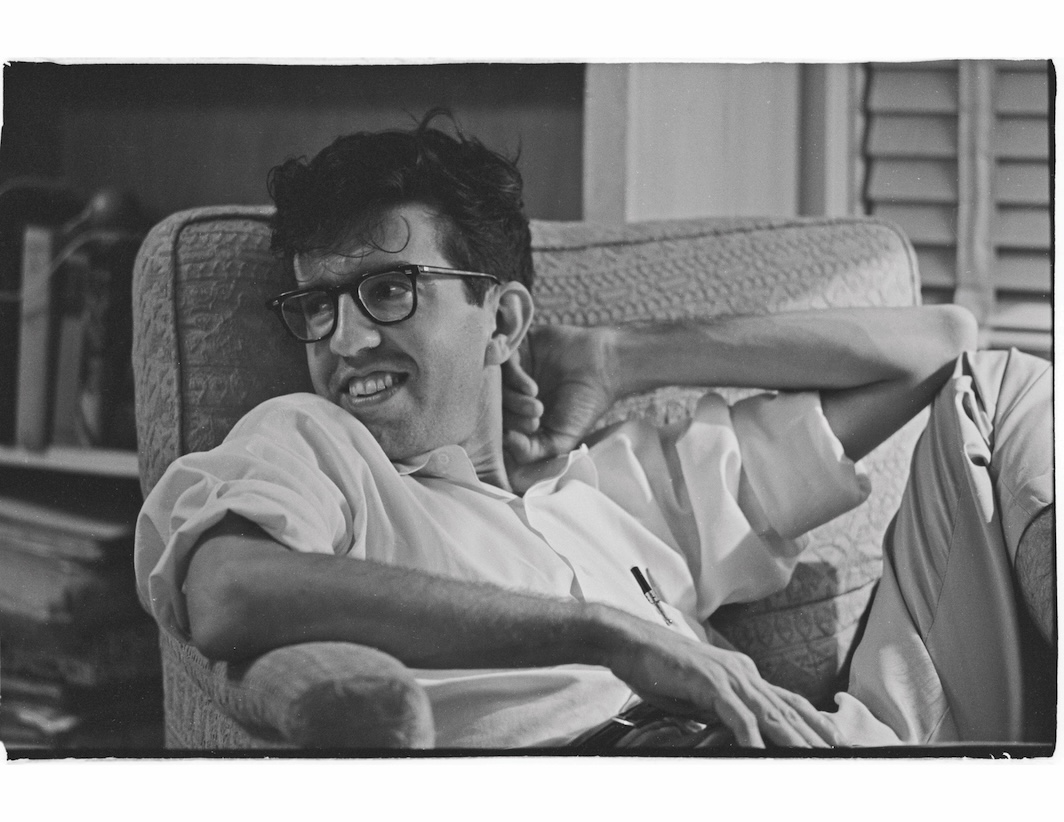
In Western Star, Streitfeld occasionally shares a sweet personal remembrance of McMurtry, whose orbit he first entered as a regular customer at Booked Up, the palatial bookstore that the novelist opened in Archer City in 1988. He quotes from a voicemail that McMurtry left him after an early screening of 2005’s Brokeback Mountain, whose screenplay was the triumph of McMurtry’s later career, expanded significantly with his cowriter Diana Ossana from a rawboned short story by Annie Proulx. There had been a long battle to get the film made, and McMurtry had little faith in director Ang Lee’s ability to make it well. He’d convinced himself he was going to hate it. “I think I’m probably more affected by it than anybody in the world,” he told Streitfeld over the phone. “I sobbed helplessly through the whole thing. Nobody saw that because I was sitting by myself. Ang was very nervous, didn’t know if I was going to hug him or slug him, but I hugged him.”
These moments are a window on a different sort of book that Western Star might have been, a quiet reflection on Streitfeld’s friendship with a writer who could be elusive if not outright hostile to the public eye. Instead, Streitfeld opted for a more traditional biography, albeit one that seems subtly colored by that friendship even when it isn’t addressed directly. He draws on correspondence, interviews, and extensive archival research, with a particular focus on a few key works: Lonesome Dove; The Last Picture Show, McMurtry’s 1966 third novel, a frank and atmospheric tale of sex and desperation in a thinly disguised Archer City, as well as its masterful 1971 film adaptation by Peter Bogdanovich; Horseman, Pass By and Hud; and Brokeback Mountain.For a Lonesome Dove fan, Streitfeld’s sleuthing out of details from McMurtry’s family history that are echoed in the novel is delightful. His long examinations of Hud and The Last Picture Show make the persuasive if implicit argument that McMurtry’s work was as important to New Hollywood as it was to mid-century popular American literature. (He quotes Paul Schrader on Newman’s role in Hud: “Probably the most important performance in the history of cinema. . . . It’s the first time that an American bad guy has been presented without excuse or remorse.”)
Still, Streitfeld’s quest to tell McMurtry’s story once and for all turns out to be nearly as quixotic as Gus and Call’s trek to Montana. In his case, the grand territory up north has already been settled. Finding something new to say about McMurtry is an unenviable task: Walter Benjamin at the Dairy Queen, just one of his six memoirs, does a fine job on its own at charting the influence of his ancestry and upbringing on his literary preoccupations, one of Streitfeld’s primary concerns with Western Star.Of course, a fiction writer may be prone to exaggerating or altering events in accordance with his idea of the larger truth, leaving room for a scrupulous biographer to swoop in with the real story. More to the point, then: the definitive biography of Larry McMurtry has already been written. Larry McMurtry: A Life, by the seasoned literary biographer Tracy Daughtery, was a Pulitzer finalist in 2024. It is a comprehensive and compulsively readable examination of McMurtry’s life and work, filled with gossipy revelation, shrewd criticism, and convincing suggestions of the ways that his relationships and preoccupations inflected his novels. It also gives a lively sense of McMurtry the man—warmhearted but ornery, swaggering on the page but shy in person, party to a striking number of unconsummated or otherwise chastely distanced romances—that is curiously hard to come by in the book by his friend. Western Star informs us tersely of McMurtry’s “interest in erotica.” From A Life, we learn about the entire room devoted to pornography in his house in 1960s Houston, and what sorts of smut he hung on the walls.
It’s not that Streitfeld is reluctant to make McMurtry look bad. He establishes the author’s weakness for self-mythologizing early on, and corrects the record frequently and with clear relish. McMurtry carried deep sadness and anger about his Texas forebears’ brutal subjugation of Native Americans, and late in life took to repeating an old family legend that some Cherokee or Choctaw or Sioux blood had mingled in the McMurtry line. Streitfeld devotes a brief chapter to dispelling this fallacy through a DNA test that the author’s younger brother consented to take for the book. This sort of fact-checking has clear merit. But too often, Streitfeld gets hung up on minor points at the expense of the big picture. No fib or misremembered fact is too small to catch his carefully demythologizing eye: in one early passage, he chides his subject for a 2005 interview in which he said the first McMurtry family reunion had happened in 1919, when in fact it was two years earlier.
Sometimes, Streitfeld seems to forget that the reader doesn’t already know McMurtry well, like he does. As Western Star draws to a close, he informs us that the author worked on the Brokeback Mountain screenplay “in his usual fashion: five pages every morning, no more, no less.” This lifelong habit had an obvious impact on McMurtry’s literary legacy, a huge and sometimes maddeningly inconsistent oeuvre produced with workmanlike regularity and apparent disregard for the question of whether inspiration was flowing. Streitfeld alludes to McMurtry’s dutiful creative approach early, drawing a parallel to his upbringing on the ranch, but it’s not until this late and offhanded mention about Brokeback that he describes it directly. Western Star can sometimes feel like a conversation at a bar with a friend who lets their stories get away from them, arriving at the punch line before they finish the setup. Wait,you want to interrupt, go back and explain that part.
The bookopens with a vivid scene that could have been drawn from one of McMurtry’s own bustling novels about contemporary Texas. “In a strip mall near the San Antonio Airport,” Streitfeld writes, “across from Margaritas to Go, the personal possessions of the most famous writer in Texas are about to be auctioned in three hundred lots.” “The history of Larry McMurtry is being reinvented” at the estate sale, Streitfeld continues: copies of his novels touted as belonging to him personally are missing the stirrup bookplate he used to mark his extensive library; there’s a pinstripe suit, despite the deceased’s well-known devotion to blue jeans, so total that he even wore them to the Oscars.
“This is where he based so much of his life, so much of his best work,” says the narrator of a promotional video of McMurtry’s hometown. “It’s also where he died. Right here in Archer City.” But McMurtry didn’t die in Archer City, Streitfeld reveals in a highly satisfying bit of myth-busting. He did return to live there as an adult, but he spent his last moments in Arizona. Streitfeld asked Diana Ossana, one of McMurtry’s closest friends, why the video was wrong. “Even if I die in Tucson, let’s just say I died in Texas,” McMurtry had told her. Streitfeld draws a poignant connection between this dying wish and the ending of Lonesome Dove: Gus, having been shot almost immediately upon arriving in Montana, asks Call from his deathbed to take his body back home.
McMURTRY WROTE MORE than thirty novels, thirteen books of nonfiction, and dozens of scripts for film and TV—thousands and thousands of pages, filled dutifully every morning for half a century. He wrote about love, sex, loneliness; book collecting; parents and children; Hollywood; women ignored by their men. His narrative voice is relaxed and plainspoken, often with a note of wry amusement. He is beloved for his characters, the chattiest and most affable bunch of cowboys, diner waitresses, and bumbling writers you’re likely to encounter in American fiction. Even a dispassionate reader might find themselves arguing with Patsy Carpenter, the brilliant and temperamental protagonist of Moving On, or wishing they could share a glass of wine with Aurora Greenway, the iron-willed widow who rules benevolently over Terms of Endearment.It was his genius for imagining people you feel like you really know that helped him become the rare literary novelist who also made regular appearances on bestseller lists. It certainly wasn’t his plots. He wrote realistic stories that conform to the ideals of the nineteenth-century literature he gobbled up as a young man, except that they take little interest in cause and effect, tension and release, setup and resolution. Events meander from one to the next with hardly any narrative propulsion to guide them, rather like they do in real life. Editors nagged him about his weak storylines enough that he swore off working with them after his second novel; critics took up the job from there.
In McMurtry’s best work, this aimlessness is not a bad thing. 1970’s Moving On, his first attempt at telling a contemporary story, is sprawling and panoramic, full of layabout grad students and fast-talking rodeo cowboys, cheeseburgers and six-packs of Lone Star—like a Richard Linklater film in the form of an eight-hundred-page novel. It’s one of my favorite books, and even I would have a hard time telling you what it’s about. But drop in on this party scene and tell me you can’t taste the lukewarm booze on your tongue:
Patsy drank more punch. She felt lighter still, and happier. Hank was stroking the inside of her hand with one finger. Lee Duffin looked quiet and thoughtful. Peter lay stretched out on the floor with his head in her lap. Lee stroked his forehead. Patsy suddenly found herself liking Lee enormously, for her poise, for her courage, for her kindness to Peter. She found herself liking everyone enormously: Emma, who went on morning after morning feeding her boys cereal; Flap, who went on day after day studying for prelims, and who drank well at parties; Kenny, for having the party; even the stocky girlfriend, for being so tolerant of Kenny. She had not been to a party in a long time and had forgotten the feelings that swept over her; she had a strong sense of being involved with everyone else in the ruin of something. What was being ruined scarcely mattered: a civilization, a generation, or only the summer, or only an evening, or perhaps only themselves. What seemed important was that they were all in it together. No one seemed unhappy, and yet no one was likely to be spared. She drank some more and peeled her wet blouse loose from her chest. “The humidity is getting worse,” she said.
The spare, penetrating style on display in this passage lapsed not infrequently into bagginess. Sometimes, McMurtry seems to be revising on the fly without reaching for the backspace key, as in a sentence from Lonesome Dove that makes me smile fondly whenever I think of it: “He shut his eyes for a moment, and when he opened them he saw a surprising sight—or two sights, really.” Call and Gus were two sides of McMurtry’s character, both expressed in his prose: the no-nonsense hard worker, pounding out pages come hell or high water; and the charismatic slacker, shrugging off the responsibility of editing, confident that his charm will carry him through.
In Larry McMurtry: A Life, the 2023 biography, Daugherty draws from correspondence between the author, his agent, and his editor to show how the latter pushed McMurtry to restructure his first two novels for more traditionally suspenseful storylines. McMurtry fought the interventions bitterly, and regretted his eventual acquiescence for the rest of his career. Daugherty writes movingly in defense of McMurtry’s preference for free-ranging observation over plot, which places his stories “in the thick of life’s long, muddy texture: all is passing, and will pass. Nothing suspenseful about it; all we have is the richness of specificity as our short lives unfold.” He also argues that this openness played a role in McMurtry’s celebrated attention to his women characters, who might have been shackled to stock roles in more conventional tales.
Lonesome Dove is remembered as McMurtry’s masterpiece in part because it allowed him to turn an apparent flaw into a virtue. Finally, he had a story whose whole point was its pointlessness. Two old-timers lead their ragtag crew on a spectacular journey for no real reason; when they get to the promised land, one of them dies and the other goes back home. McMurtry was disappointed that readers didn’t understand the book as a parable about the bloody futility of manifest destiny, and came to regard it as something of a failure: “I thought I had written about a harsh time and some pretty harsh people, but to the public at large, I had produced something nearer to an idealization,” he wrote in the preface to the 2000 edition. “Instead of a poor man’s Inferno, filled with violence, faithlessness and betrayal, I had actually delivered a kind of Gone with the Wind of the West.” Lonesome Dove also turned a virtue into a flaw: Gus, Call, and the gang are so real, so absorbing, so much fun to hang out with, that it’s easy to miss the weighty themes the novel wears on its denim sleeve.
WESTERN STAR IS INSIGHTFUL about Lonesomea Dove, which Streitfeld suggests was McMurtry’s attempt to understand his father, a loving but hard man born in 1900, the youngest of nine children—too young, he felt, to taste the glories of the unsettled West. “Larry did not have to look far to feel a sense of vanished horizons and missed chances,” his friend and biographer points out. In exhaustive early chapters about the novel’s inspirations from history and McMurtry’s familial lineage, Streitfeld identifies the legendary nineteenth-century cowboy and Texas Ranger Charles Goodnight, a man who “mourned the very things he helped finish off,” as a key figure. Books with less connection to the Old West get shorter shrift. “Larry wrote that he was frustrated that his rural books were more celebrated than Terms of Endearment, even though he felt Terms was a better novel,” Streitfeld acknowledges, but gives one of McMurtry’s most deeply felt stories barely more than passing mention himself.
Streitfeld, a less industrious literary critic than Daugherty, occasionally quotes from user reviews on Goodreads and IMDb in lieu of his own analysis—a dispiriting habit, especially because he often hits the nail on the head when he makes his own attempts. His diagnosis of Lonesome Dove’s famously baffling final sentence neatly conveys the balance of taut command and easygoing slackness that animates McMurtry’s work. The book ends on a quote from one minor character about another who has committed suicide: “They say he missed that whore.” “If you read very deeply you could make an argument that this underscores one last time Larry’s thesis that these men were less heroes than deeply wounded creatures, and that if women had been equal partners in the settling of the West the body count would have been a lot lower,” Streitfeld writes. “If you read less deeply, you probably thought Larry figured it was time to turn off the typewriter, and this was as good a point as any. Both conclusions probably have equal merit.”
In the end, Streitfeld seems less interested in McMurtry’s prose than in the stories he told about himself. His frequent quibbles with established facts large and small seem at times like implicit arguments for his book’s existence in the wake of A Life and McMurtry’s own extensive autobiographical writing. Late in Western Star he writes that the novelist’s memoirs are “modestly entertaining, but . . . illustrate the perils of writing from memory and then declining to do any fact-checking. Woe to any biographer who relies on them.” Without mentioning Daugherty by name, he writes repeatedly about McMurtry’s hostility to other biographers, suggesting that the novelist trusted him alone to get the story right. There is a note of defensiveness, to be sure—Daugherty’s primary-source research is every bit as thorough as Streitfeld’s—but also of touching devotion. Streitfeld is determined that the legacy of a writer so concerned with diffusing old myths not be clouded by his own tall tales.
Here is another poignant echo of Lonesome Dove’s final scenes: a man on a trek to preserve his friend’s memory, carrying on despite many obstacles and a nagging sense that his quest may be misguided. McMurtry’s books are full of doomed and ridiculous journeys, characters setting off in search of meaning or satisfaction from towns that offer little of either, only to find that the open frontier is even less hospitable than home. The decision to press on in the face of good sense is what lends his heroes their dignity and their absurd humanity, qualities that in the author’s eyes added up to the same thing. As Call drags Gus’s remains across the country, he drops in on Clara Allen, the love of his old buddy’s life, who scolds him for the foolishness of upending his life to honor a dead man’s request. “I can’t forget no promise to a friend,” he tells her. “Though I agree it’s foolish and I told him so myself.” Then he rides off toward Texas.
Andy Cush is a writer and musician living in New York.