


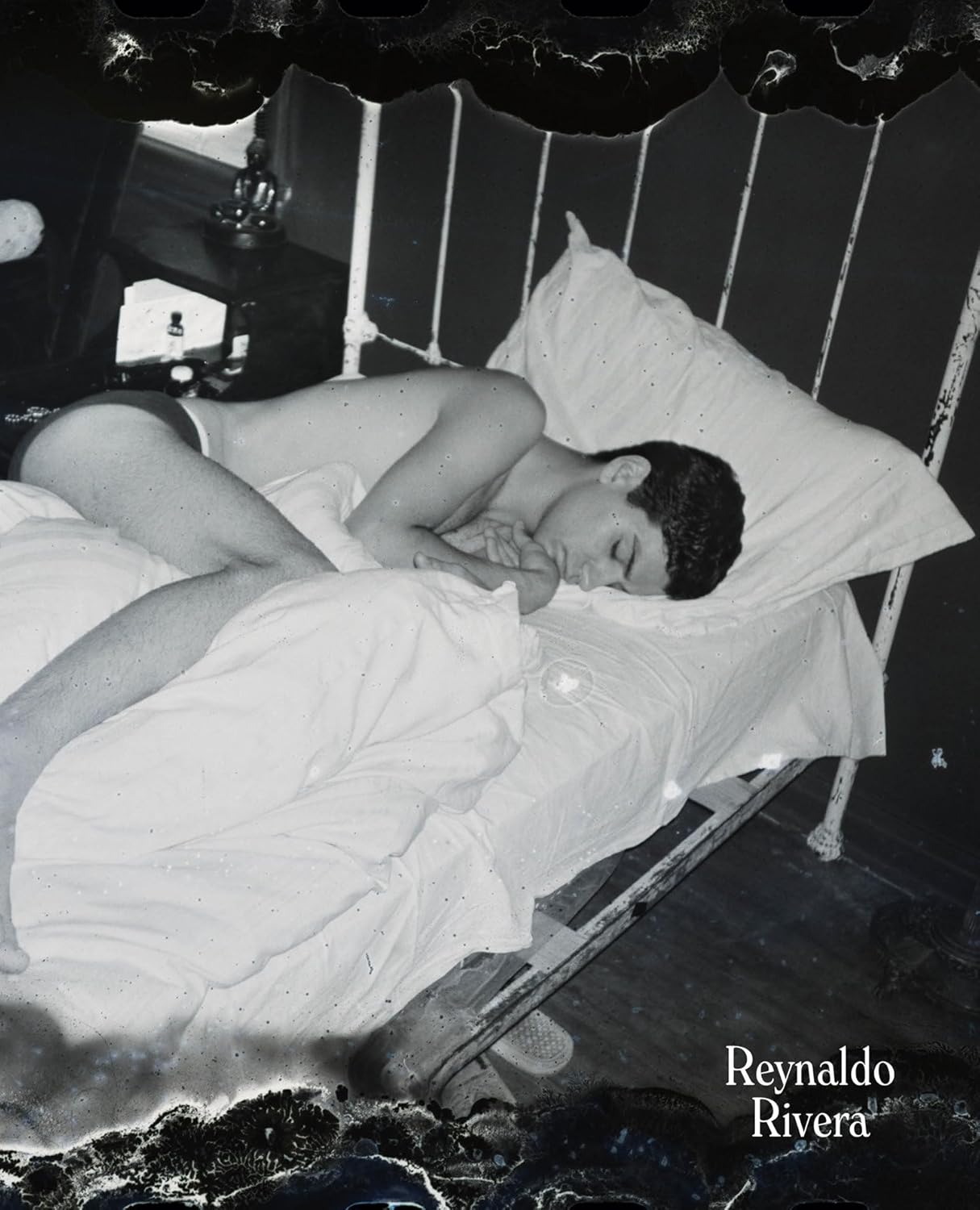
Before death there is life; before life there is sex. Propiedad Privada, a new photo monograph by Reynaldo Rivera, spans four decades of lust and loss with an unseen collection of intimate photographs. Twelve texts from writers including Constance Debré, Brontez Purnell, Abdellah Taïa, and Justin Torres expand Rivera’s photographic world, arguing, through personal narratives, for an honest record of queer life. Rivera presents sex pics and snapshots, expressing that love is hope (and hope is poison). Here, death looms over the erotic, making Propiedad Privada an insistent evocation of the beauty that precedes brutality. The earliest photo was shot in 1983, under the specter of the AIDS crisis. No moment was a given, no future granted. Most photos show Rivera and his crew in Los Angeles—the focal point of “Fistful of Love/También la belleza,” Rivera’s 2024 exhibition at MoMA PS1 in New York, and Provisional Notes for a Disappeared City, his first book with Semiotext(e)—but the essays take us through the streets of New York City, to an apartment in Paris, to a bathhouse in Ireland, to a summer in Morocco, emphasizing the emotional reach of Rivera’s work. The sardonic title—“private property”—borrowed from a Lucha Reyes song, sets the tone, anguished and alive.
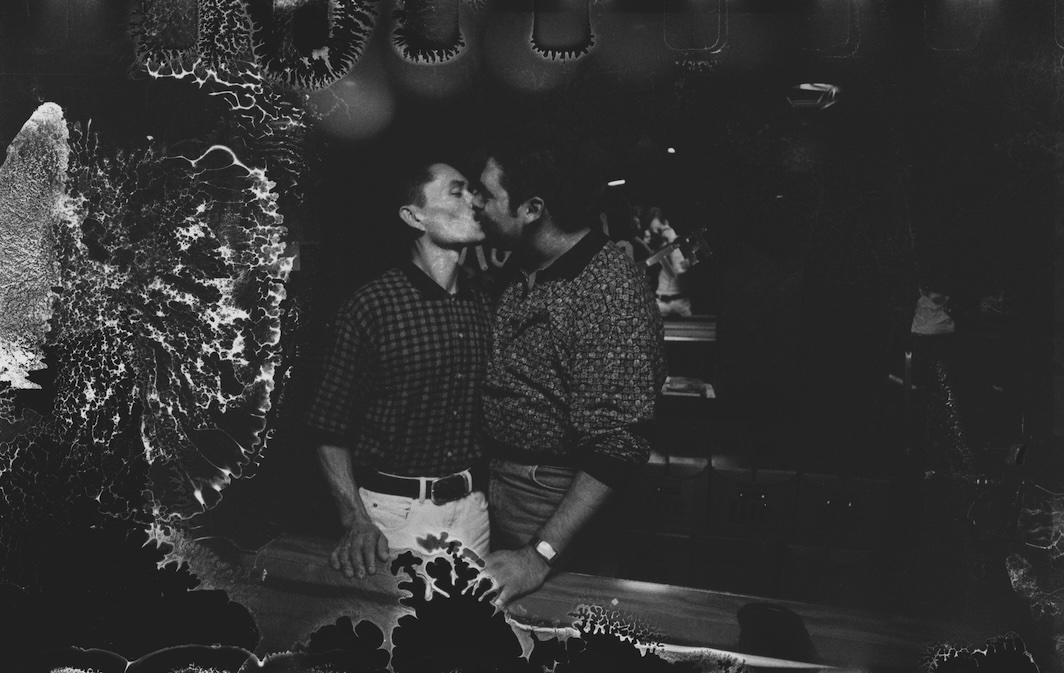
Rivera watches over his loved ones, offering himself up alongside them. In Reynaldo, Ricardo, Pasadena, shot in 1987, the artist reclines, nude, in a wooden chair, erect and in control. Ricardo kneels at his feet, his head disappearing into black under Rivera’s raised thigh. Time loops, resisting linearity. Reynaldo gets it on with Monika; three years earlier, on the next page, Rivera’s lover, Bianco, looks sullenly at the floor. Connie lies naked in bed. Steven sucks. Sex acts romantic, languid, triumphant. Some subjects have names; some are just “girls.” Some pose, looking directly at the camera, laughing, tongues out, hands squeezing tits, with warm, conspiratorial expressions that support Rivera’s presence in more somber or erotic “private” moments.
These photographs are proof of life, made with enthusiasm and love, but whose property are these private images? To decide, Rivera, outliving many of his subjects, must converse with ghosts. Lauren Mackler’s essay recounts that the initial audience for Rivera’s “Blue” series was the artist himself, alone in the dark room looking for release. “I don’t want to be Truman Capote; I don’t want to be a pariah. Even though this book includes some exes, this book isn’t about them,” he insists in his own essay. It’s clear that he believes this, though the specificity of his subjects, and their bare bodies, is what brings the book to life. A hate note from an ex, post-breakup, is printed on the back cover, hidden under the dust jacket, as if to admit, with a wink, that anger is a part of the project, too. By publishing this forty-year archive side by side with contemporary voices versed in making the personal public, Rivera suggests that the moments his photographs capture belong with the worlds that they came from, even as they speak to those of us surviving queer worlds of our own.