


EVERY WOMAN is a daughter. We begin our lives in lineage, understanding that our lives are possible only because of our mothers’ life, and that our first attachment will eventually be our first act of separation. There are many ways to understand being a woman—even more ways to misunderstand her—and then here with the label of daughter is one truth so basic, so ordinary. Some of us will also be mothers, yes, to children we give birth to or to ones we choose to love and care for, and daughters will know many mothers in many forms as long as we live, but to be a daughter is a kind of lock around our lives that has no key.
I was once a daughter. I still am, but I also was one before I was this daughter: the kind of daughter that can occasionally—usually—forget to think of myself under that term, which can become obscured by a longer list of roles and states and concepts, like sister or citizen or job. Once upon a time a daughter was born and she grew up to be me.
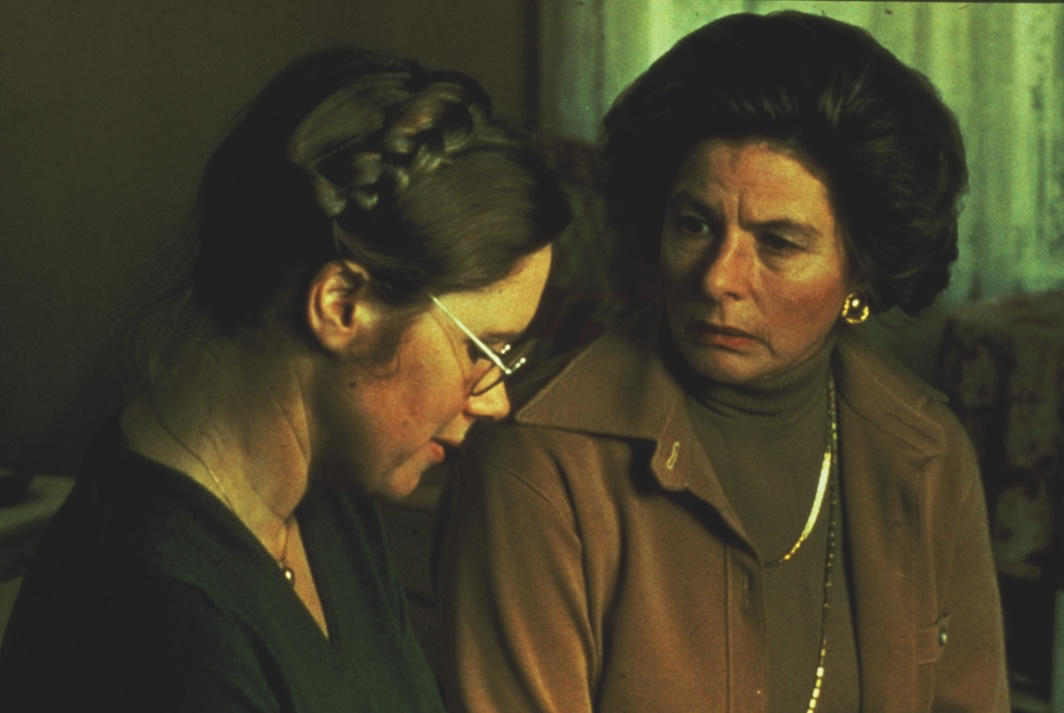
In Ingmar Bergman’s Autumn Sonata (1978),Liv Ullmann and Ingrid Bergman play a daughter and mother spending one very long night together in the daughter’s home. Ullmann’s husband and sister are also there, and they come in and out of the drama occasionally, but this is a film about the often-futile attempts of two women who made each other who they are to understand each other. “Don’t we ever stop being mother and daughter?” Ullmann asks, not rhetorically. “You had taken charge of all the words in our home,” she says to Bergman later, demanding that for once her memories be heard as she remembers, unedited and untouched by her mother’s overpowering presence in their family life. Bergman, as the charismatic and self-absorbed mother, listens all night. She explains herself with excuses, sometimes, but not all of them are attempts to deflect blame; they are also the reasons and rights she has as an imperfect person. It is unclear what, if anything, will change between them after the night ends. The question is not whether they are capable of change in themselves, but whether either of them might accept that the other can change who she is at all.
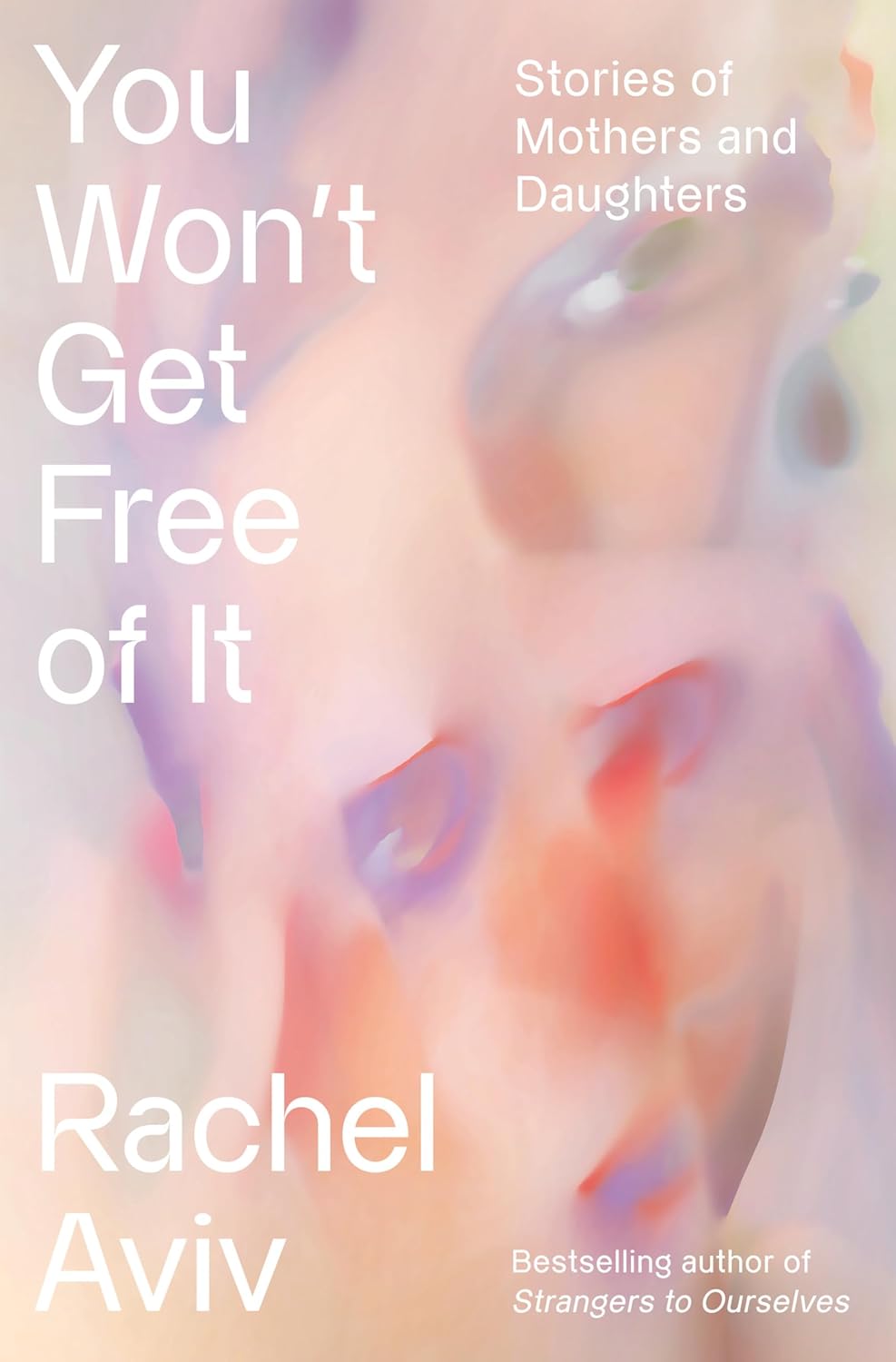
This is where we find the journalist Rachel Aviv in her new book, You Won’t Get Free of It, a collection of six essays originally published in The New Yorker, where Aviv has been a contributing writer since 2013, along with an introduction original to the book. These selections are a gathering of her reporting on stories of mothers and daughters and the ways they try to know or find each other.
All of Aviv’s writing begins with the desire to know a stranger. Her essays always come back to the possibility of learning familiarity toward people who seem too far away, either physically or psychically, to locate. Aviv’s first essay collection, Strangers to Ourselves (2022), is separated into chapters featuring a person caught between definition and diagnosis, the context of their culture and status in their community as essential to understanding them as their individual character and personal history. These are accounts of people experiencing the unbearable tension between porousness and proximity, a need for care at odds with the limits of accepting or receiving it. In that book, we meet Naomi, the young mother who, in a profound psychosis, drops her two children and herself off a bridge, believing she was offering them “a merciful death” rather than a “torturous one”; Laura, an affluent young woman who feels relieved to learn that her hopelessness and suicidal ideation could be considered bipolar II, until years on various medications left her feeling completely alienated from her own mind; and Ray, a doctor who began his treatment for depression at an institution that discouraged antidepressants and lives the rest of his life fixated on the ways it might have failed him.
Aviv’s essays in Strangers are about people close enough to see each other yet still not sure if they really know each other. None of her subjects can be considered sick or healthy in isolation. Naomi is a Black woman whose psychosis largely revolved around the hostility she experiences living in a largely white cultural environment, one that denies her humanity and punishes her vulnerability; Laura’s class and wealth give her access to treatment but not nearly enough insight into her own experiences; and Ray’s life intersects with a history of psychiatry and psychology that has been, and continues to be, constrained under the limits of what we know about the effects and possibilities of pharmaceutical treatments.
Free explores a similar idea about connection and closeness. The bond between mother and child is a physical one first, the umbilical cord easily lent to an overused but apt metaphor. Less known or used as a metaphor is the concept of the “fourth trimester,” the name given to the three months after birth when a mother and child must learn how to be alone in their bodies. The medical definition of this time is twelve weeks; probably many of us can think of mothers and children who spend their whole lives trying to understand how to live fully apart from each other, to create or maintain reciprocity without sacrificing liberty. In her introduction, Aviv states that the stories she chose originally seemed to her like they were written from a perspective that was “existentially, like a daughter,” but that she later returned to them, after having children, “with a different identification. It was as if I had failed to see the drama on mother’s side, too—her particular longings and humiliations and needs.”
Aviv’s mother wanted to be a writer, we learn in Free’s introduction. Once, as a child, Aviv called her mother from summer camp desperately unhappy, and her mother immediately went to pick her up. Aviv’s mother had planned a self-imposed writer’s retreat at a cottage, and so Aviv joined her. They spent that time, according to her mother’s journals, writing their respective works. The younger Aviv wrote about a daughter who sounds somewhat obsessed with her mother. In her short story, she wrote: “I ran up and gave my mother the biggest hug I could to get all the love for my mom into her.” In another scene, the mother and daughter characters hug so hard that she felt she needed to clarify that they did so “without turning faint from not enough oxygen.” There is so much love it feels fatal. The mother character dies that night. “It’s not hard to see my first foray into writing, which made my mother immensely proud,” Aviv reflects, “as an exercise in acting out the event that I most feared and perhaps on some level secretly wished for—an end to this overwhelming and exhausting fusion.”
Aviv’s writing has a quality that makes everything she describes feel like both a mystery and an inevitability. Her stories develop in ways that her subjects (and her readers) could not have predicted; at the same time, what unfolds is revealed to be the only way things could have happened. I will begin reading an essay by her and often am at least halfway through before realizing that I am reading about a person who is dead. Her descriptions are so vivid and her details so exacting that I take for granted she must be writing about a person she met herself. The events of that person’s stories give the sense of being eternal and immovable, as though they are parables designed to impart a truth rather than just an accounting of fact, so apparently easeful in their skill and precise in their perceptions. But nothing in life, let alone in journalism, exists in stone. Here in Free, Aviv brings in her skill and precision to open up the original New Yorker essays with revisions to include more from the mother’s perspective, after Aviv realized that she had, unconsciously or otherwise, omitted something that had seemed too obvious to be considered relevant, or too concealed within what appeared to be an emotional logic to be considered worthy of attention. One such example occurs when Aviv reexamines her own life: “That my life today is the one my mom tried to have for herself is a fact so unambiguous that I have generally preferred not to allow it into awareness.”
As Aviv revisits the essays in their original form, other mothers and daughters, too, are perceived in a new light, with different aspects of their lives coming into focus. There is Linda Bishop, a woman and mother who refuses to be categorized as mentally ill and so is eventually lost inside a health care system that refuses to treat those who don’t acquiesce to their supremacy. There is Hannah Upp, a woman and daughter who periodically entered fugue states with seemingly no reason or diagnosis and would disappear from her daily life, prompting panic and searches from her friends, father, and mother. There is Elizabeth Loftus, a woman and daughter and preeminent psychologist who has frequently appeared as a paid expert witness on behalf of defendants such as Bill Cosby, Jerry Sandusky, and Harvey Weinstein, undermining testimonies of alleged victims by arguing that memory is malleable. The only defendant she ever refused was, Aviv notes, a man tried for operating a gas chamber in a concentration camp.
As Aviv reflects in her introduction, in the time between publishing these essays in The New Yorker and now in Free,she reassessed ideas she developed about her subjects, incorporating details that she either didn’t know or didn’t understand the first time around. Aviv reported on Bishop under the assumption that her psychotic break “appeared out of nowhere, after a harmonious childhood and early adulthood.” In Free, Aviv recalls an interview that complicates this analysis, noting that one of Bishop’s closest friends had candidly told her that Bishop got pregnant soon after graduating from high school and was sent away to an institution for young pregnant women, where she gave the baby up for adoption. “Apparently, at the time, I did not think losing a child was a biographical fact relevant enough to mention,” Aviv reports on herself. “I had not even asked a follow-up question.” After the story was published, Bishop’s sister told Aviv that she had only recently learned the two of them had been adopted by the people they grew up knowing as their biological parents, possibly born in the same kind of home where Linda had given birth to her own child. Linda did not live to learn this for herself, but how can we avoid wondering about the way people have forms of knowing so deep they are more cellular than subconscious? “The neglected detail seemed to open up another layer of experience,” Aviv says, “running underneath the one I’d thought I was writing about.”
In the book’s version of her essay about Upp, Aviv interviews Upp’s mother again with the intent to “redress what I saw as a kind of imbalance, a deficit of curiosity about the mother half of the couple.” Before Hannah was born, Hannah’s mother, Barbara, had a premature baby who died within a day of birth. “Hannah’s fugues had always occurred around the day that the baby was born,” Aviv says. She knew this the first time she reported the story, but “at the time I resisted a detail that seemed too symbolic, even if it was true.”
Even as Aviv admits that she feels she sometimes missed or avoided hearing what was being said in full, the painstaking quality of her attention is a potent one. Four out of the six essays chosen for this collection draw their titles from quotes given by Aviv’s subjects; sometimes it is a sentence spoken during an interview, or a snippet of an exchange between a subject and her doctor, or a sentence from a short story about a mother. The words are delicate with pain, a sliver under the skin so small in comparison to the care it demands. Even before knowing the context, one realizes that all the titles and statements express suffering and loss. The throat stitches closed at the thought of repeating them: I wish I was her for you,a woman mistaken for a missing daughter tells a mother. As if they were my daughters,a domestic worker thousands of miles away from her own children says of the ones she is paid to care for. You won’t get free of it, Alice Munro writes, describing in fiction the feeling that one could decide to choose between the love of a man over the care of a daughter.
THE BOOK TAKES ITS TITLE from Aviv’s 2025 essay about Alice Munro, a stunning examination of what happened in the life of one of the most acclaimed fiction writers of our time. Soon after Munro’s death, which was mourned deeply by her many readers and the literary institutions that venerated her, her daughter Andrea published an essay in The Toronto Star stating that Munro’s husband, who was Andrea’s stepfather, had sexually abused her in childhood, beginning when she was only nine years old. Munro had learned of this abuse during Andrea’s childhood, as had Andrea’s father, and neither parent made the decision to separate and protect their daughter from her stepfather or to report him as a predator.
We cannot know what Andrea’s parents were thinking or feeling about this violence toward their young daughter, only the accounts that remain, and the truth that Munro never left this man, remaining married to him until his death and estranged from Andrea and her other children to varying degrees for the rest of her life.
Aviv captures shocking facts about Munro, and also the shock readers felt in learning about them. But she also shows that the abuse was never really a secret, and so should not be received as a surprise. Munro did not hide or obscure her complicity, nor the fact of her husband’s violence. She told people she knew. And though her stories clearly contain artistry and skill and invention, many of them are also almost certainly cut with some jagged remnant of her reality. This is not to say that her writing is a simple echo of real life or a transcription of a well-tended memory, but that her gift, and apparently her curse, was to be able to say nothing about what the pain was, while saying a good deal about how pain lived its own life inside the people who could neither speak it nor keep it a secret. As readers and observers, we have the rare public reminder that we know such private despair can exist between daughters and their mothers.
Munro’s stories are not parables or fables, morality tales designed to impart a lesson. But what remains of Munro’s scenes in memory come to feel like they could be, in the sense that fairy tales have always been given to children with the expectation that they will help them parse and perhaps partially crack the codes of their still-new lives on earth. This is in lieu of teaching them an actual language made of words that can explain what it feels like to be both helpless and omnipotent, capable of causing or receiving harm and grace in deeply unequal measures. Like Aviv’s approach to reporting, it is writing that feels both alive and immovable.
You won’t get free of it, but you won’t die of it, is the complete sentence Munro wrote and Aviv quotes. I once heard someone say that mothers know they do not create life, exactly, that as soon as their children are born they understand they have birthed an inevitable death. The responsibility and expectations of motherhood are so extreme that the role of motherhood is, as Jacqueline Rose wrote in Mothers: An Essay on Love and Cruelty, most often the one society easily blames for its own structural failings. If a daughter is lost or sick or hungry or hurt, the mother is there to be the reason; if a mother is suffering or struggling, she is to be blamed all over again.
“Our mothers remain the strangest, craziest people we’ve ever met,” Marguerite Duras once wrote, and she was that eternal daughter who returned to the question of who her mother was, or perhaps why she was the way she was, again and again in her writing. Can a mother be known by her daughter? Can a daughter be known by her mother? I have noticed that the truth about this conundrum has been repeated so often it has become a cliché: I often hear that “no one” is talking or writing or making art about motherhood, that if they are they are not showing the “truth” of the experience, that our oppressively coded ideals of maternity and girlhood replace our ability to see them for what they really are, even sometimes to the woman experiencing it herself.
Certainly these sentiments can be considered reasonably accurate, particularly when it comes to stories about motherhood that aren’t those of white, middle-class, cis, straight women. And yet when I hear people bemoan the absence of women talking, I can’t help but want to reply: Have you asked them? I am at an age where I do know and have known mothers of all kinds, women who have children that they birthed or adopted or spent much painful time and resources using the available medical options to become pregnant. They have railed against the way their bodies betray their intentions. They have conceived painstakingly on purpose and completely accidentally, miscarried and mourned a devastating loss of a pregnancy. They feel different kinds of gratitude and grief toward their pregnancies, their children, their abortions, the general shape of their family. They have children who are infants, teenagers, adults, deceased. And if you ask them about it and listen as completely as you ever have, they’ll tell you as they breastfeed or grocery shop or suntan or watch TVor snake the sink drain. There is also so much art about motherhood that defies this idea that the only acceptable narratives are saintly, beatific: books and movies and paintings and songs that refuse a story written to replace the truth, many of them especially in recent years but also found throughout history, if you know where to look or who to ask.
Perhaps we are not at a loss for true stories about motherhood so much as we are tasked with an endless unlearning of the first stories we’re told about what it means to be a mother or a daughter. Think of the way our daughters hear and see their lessons: heroines are princesses disguised as peasants forgetting who they once were, extraterrestrial or interspecial interlopers who only want to be accepted as ordinary. They are mermaids who want two feet, diligent maidens who fall in love with a beast. A magic potion under the care of a wise woman heals them, a cursed drug from a wicked woman hurts them. They want, above all, to be kissed as proof of something, maybe anything: proof that they are pretty, wanted, safe, human. All the magic they experience is about being made real in a retelling of their life story. Here in Free there is even a Cinderella story, of Emma, a Filipino woman who left her own children at home to make more money for them in New York, and has since spent sixteen years taking care of other people’s children, and one that could be something out of a soap opera, about a woman who seemingly recovers from schizophrenic-like symptoms after being treated for cancer, like a patient in a coma that wakes up with a new personality during sweeps. “But becoming sane can also be a kind of narrative collapse,” Aviv writes.
Above all other common attributes, so many fairy tales and fables share the same plot device: daughters and other children are always there. Mothers are either absent entirely or the enemy. Our fictional characters are without one or both of their “true” parents, which is meant to be taken as genetic, and because of that they are at risk of exploitation and suffering, alienation and loneliness. That these experiences are understood to be temporary sufferings that only prove why they deserve the safety and sensuality of a romantic partnership, to replace an absence of family with the creation of their own, is an open text crafted by our conscious minds so that we can feel our own lives made real. Without narrative, there is no understanding.
Hannah Upp’s dissociative fugues were described as a symptom of trauma, whether external or “by an unbearable internal conflict.” One of her psychiatrists told journalists that he felt the comments surrounding Hannah’s condition, which were often disbelieving and cut with palpable rage, were because “there is an ineffable quality to dissociative cases. They challenge a conventional understanding of reality.” Perhaps, Aviv writes, these cases are too “mystical” for science and medicine; certainly they are fantastical, even in Aviv’s sensitive and empathetic renderings, which is why they warrant such journalistic attention. People don’t just wake up as someone new inside their old body; or, at least, we believe they don’t, and so therefore they shouldn’t.
Hannah and her mother, Barbara, didn’t speak about her fugues directly, but once Hannah sent her mother a book that was a contemporary retelling of Persephone and Demeter, the story of a mother who will search every part of earth looking for her daughter trapped in a kind of hell, condemned to return to that subterranean dimension once a year. When Hannah entered her fugues, “Barbara found more solace in what she described as ‘the archetype of the daughter descending and the mother seeking her, whatever that takes.’”
Most of us are aware that our myths and our fairy tales come from versions that have more in common with horror, as a genre, than children’s literature. There’s an entire economy built around contemporary adaptations that attempt to revert fantasy back into primal, elaborate terrors, the subtextual violence and desire made overt rather than supposedly hidden away from a child’s interpretation. But children are not strangers to violence or desire, though they are often treated in their youth as though they are—which is to say, they are treated like they are less than or not yet entirely human. Every fairy tale is supposed to end with some kind of reconciliation, but with Aviv, it is more like those precursors that tormented children into behaving: there are many ways to reconcile without really reconnecting, and some of them are lonely, painful, unbearable.
Somewhat curiously, as anyone with kids in their lives will have no doubt noticed, more and more of the contemporary fables have a pronounced angle of achieving psychological health. The princesses want to run their own kingdoms with autonomy and without compromise; youngest siblings want to uncover their family’s secret after generations of keeping it hidden. A friend who is a psychoanalyst once told me that he took his two children to see the latest Pixar movie. “What’s it about?” I asked him. “Generational trauma,” he said. I thought he was exaggerating until I saw it myself. It was definitely about generational trauma.
To be a mother, in the biological as well as the emotional sense, is to feel, cell by cell, how far away the people closest to us can go. How many daughters learn way too late that the way a woman becomes the most like her mother is in the desperate pursuit to prove that she won’t? Aviv’s mother, when she read her daughter’s work, gave comments that Aviv felt were showing signs of “delusions of reference,” the “psychiatric term used to describe the false belief that neutral signs carry targeted, personal meaning.” But Aviv notes that it “could be said that being a mother is a kind of chronic delusion of reference. In the early years, it is right to interpret every gesture or noise as a signal. When the child moves on, though, the mother remains in a state of interpretative readiness, attuned to cues that are no longer meant for her.” They are, maybe, reading a text while ignoring the words.
The true experience of a mother or daughter failing each other is rarely as damning as a children’s fairy tale—there are far fewer poisons or steep cliffs or burning flames. But defeating a villain in fantasy lacks the kind of psychic torment real life has no end of: exactly what Aviv has captured with her impeccable deconstructions and brilliant renderings of what she has found and seen and learned, what she wrote the first time she asked a question and what she learned when she returned for a second. Perhaps we already knew this, and perhaps we always need another reminder. You will learn enough about your mother to never know how to understand her. You will give your daughter to the world and then she will leave you for it. You will forgive your own mistakes and never absolve anyone else, or you will abandon your own forgiveness to allow someone else’s absolution to exist complete and pure. As long as you live, you will, depending on who is writing the story and who is reading, never get free of it.
Haley Mlotek, a writer living in Montreal, is the author of No Fault: A Memoir of Romance and Divorce (Viking, 2025).